1.5 Quart Baking Dish: Ultimate Size & Sub Guide
Key Takeaways
- A 7-cup baking dish is closer to 1.75 quarts rather than the standard 1.5 quarts.
- Adjust your recipe ingredients by increasing them 15% for a 7-cup dish and reducing by 15% for a 5-cup dish.
- Matching the batter depth to the original recipe is essential for even baking.
- Too shallow batter causes overcooked edges, while too deep batter can leave the center undercooked.
Table of Contents
- Why the 1½ Quart Baking Dish is Your Kitchen's Perfect Sidekick
- What Exactly is a 1½ Quart Baking Dish – Dimensions, Capacity & Common Confusions
- 1½ Quart Baking Dish Materials Decoded: Glass, Ceramic, Porcelain & Emerging Options
- 1½ Quart vs. 2 Quart Baking Dish: Key Differences & When to Swap
- How to Measure & Verify Your 1½ Quart Baking Dish Capacity Accurately
- Perfect Substitutions: Using 1½ Quart for Recipes Calling for Other Sizes
- Baking Time & Temp Adjustments for 1½ Quart Dishes – No More Guesswork
Why the 1½ Quart Baking Dish is Your Kitchen's Perfect Sidekick
Picture this: It's Tuesday night, you're cooking for two (maybe three), and that massive 9x13 pan feels like overkill for your cozy dinner plans. Enter the 1½ quart baking dish, the Goldilocks of bakeware that's just right for small-batch cooking without the leftover guilt.
This compact powerhouse handles everything from individual casseroles to decadent brownies, fitting perfectly in smaller ovens while delivering restaurant-quality results. Whether you're testing a new recipe or scaling down holiday favorites, the 1½ quart baking dish transforms ambitious cooking dreams into manageable reality. If you're looking to upgrade your kitchen essentials, explore these kitchen utensils that pair perfectly with your bakeware for seamless prep and serving.
For even more versatility, consider adding a high quality spatula for baking and cooking to your toolkit, it's a game changer for scraping every last bit from your 1½ quart baking dish. Learn more in this high quality spatula for baking and cooking guide.
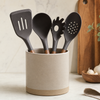
Pair your precision baking with DI ORO™'s award-winning silicone spatulas, because what touches your food matters, and our forever-chemical-free tools ensure every scrape is as clean as your conscience.
What Exactly is a 1½ Quart Baking Dish – Dimensions, Capacity & Common Confusions

A 1½ quart baking dish holds precisely 6 cups of liquid, translating to 1.42 liters for metric cooks. The most common configurations measure 8x8x1.5 inches for square dishes or 8.5x4.5x2.5 inches for rectangular loaf-style pans. These aren't arbitrary numbers, they're calculated to provide optimal heat distribution for even baking.
Here's where it gets tricky: volume doesn't always equal exact dimensions due to fluted sides, rounded corners, and manufacturer variations. A dish labeled "1.5 quart" might actually hold 1.3 or 1.7 quarts depending on its shape and wall thickness. For more on the nuances of bakeware, check out this authoritative overview of bakeware.
Standard Shapes: Square vs. Rectangular vs. Oval Breakdown
Square dishes excel at even browning thanks to uniform corner-to-center heat distribution. Rectangular styles work better for layered dishes like lasagna, while oval shapes accommodate roasts and whole vegetables. Each shape affects cooking time, square dishes typically bake 5-10% faster due to increased surface area exposure.
Volume Myths Busted: Why Your Dish Might Hold More (or Less) Than Labeled
Test your dish's true capacity by filling it with water using a 1-cup measuring cup. Pour exactly 6 cups, if it overflows, you've got an undersized dish. If there's significant headspace, it's oversized. This simple test prevents recipe disasters and helps you adjust baking times accordingly. The formula: Length × Width × Height ÷ 57.75 = actual quarts.
1½ Quart Baking Dish Materials Decoded: Glass, Ceramic, Porcelain & Emerging Options
Material choice dramatically impacts your baking results. Glass conducts heat 25% faster than ceramic, creating crispier edges but requiring temperature adjustments. Ceramic retains moisture 20% better, making it ideal for casseroles and custards. Porcelain offers the best of both worlds, even heating with superior stain resistance.
| Material | Heat Resistance | Best For | Cleaning Ease |
|---|---|---|---|
| Glass (Pyrex-style) | Up to 500°F | Brownies, bars | Dishwasher safe |
| Ceramic | Up to 450°F | Casseroles, gratins | Hand wash recommended |
| Porcelain | Up to 550°F | All-purpose | Fully dishwasher safe |
Forever-Chemical-Free Choices: Pair with DI ORO™ Silicone for Safe Scraping
Your baking dish is only as safe as what touches it. DI ORO™'s pro-grade silicone spatulas are crafted without forever chemicals, ensuring every scrape maintains your dish's integrity while protecting your family's health. Our spatulas resist heat up to 600°F, perfect for removing hot dishes without melting or scratching.
For more tips on choosing the right spatula for your baking needs, see our article on the top rated seamless spatulas for baking.
Durability Test: Drop from 3 Feet – Which Survives?
Porcelain typically survives drops best due to its density, while tempered glass ranks second. Standard ceramic chips most easily. For busy kitchens, invest in reinforced glass or quality porcelain, the upfront cost beats replacing broken dishes monthly.
1½ Quart vs. 2 Quart Baking Dish: Key Differences & When to Swap
The difference between a 1½ quart and 2 quart baking dish comes down to capacity (6 cups versus 8 cups), depth, and serving size. Your 1½ quart baking dish typically measures 8x8x1.5 inches, while a 2-quart usually runs 8x8x2 inches or 9x9x1.5 inches. This seemingly small difference creates a 33% capacity jump that affects everything from cooking time to texture.
The shallower profile of a 1½ quart dish promotes faster moisture evaporation, creating crispier tops on casseroles and more concentrated flavors. A 2-quart dish retains more moisture due to its deeper walls, making it ideal for dishes that need gentle, even cooking. For small families or couples, the 1½ quart prevents the "leftover trap", you'll finish what you make without waste.
| Feature | 1½ Quart Dish | 2 Quart Dish |
|---|---|---|
| Capacity | 6 cups (1.4 liters) | 8 cups (1.9 liters) |
| Typical Dimensions | 8x8x1.5 inches | 8x8x2 or 9x9x1.5 inches |
| Serves | 2-4 people | 4-6 people |
| Bake Time Difference | Base time | Add 10-15 minutes |
| Best For | Crispy tops, small batches | Moist casseroles, larger families |
When swapping up from a 1½ quart to 2 quart recipe, reduce ingredients by 25% to maintain proper depth. For example, if a 2-quart lasagna calls for 3 cups of sauce, use 2¼ cups in your 1½ quart dish. Monitor doneness at the 75% mark of the original baking time, your shallower dish will finish faster.
Visual Guide: Dimension Overlaps & Fit Checks
Square 1½ quart dishes (8x8 inches) fit perfectly in most toaster ovens, while 2-quart versions often require full-size ovens. Check your oven rack spacing, you need 2 inches of clearance above your dish for proper air circulation. Round 1½ quart dishes typically measure 7 inches in diameter, making them ideal for single-layer gratins where every edge gets golden.
The depth difference matters more than you'd expect. A 1½ inch deep dish allows heat to penetrate quickly, perfect for browning cheese or crisping breadcrumb toppings. Deeper 2-quart dishes create a "steam pocket" effect that keeps casseroles moist but may leave tops pale.
Real-World Swap: Convert Your Favorite 2qt Casserole in 3 Steps
Start with your favorite 2-quart recipe and multiply all ingredients by 0.75. A casserole calling for 4 cups of pasta becomes 3 cups; 2 pounds of ground meat becomes 1.5 pounds. This maintains the proper ingredient ratios while fitting your smaller dish.
Reduce the original baking time by 20-25%. If your 2-quart recipe bakes for 40 minutes, start checking at 30 minutes. The shallower depth means heat reaches the center faster. Use a DI ORO™ silicone spatula to test doneness, it won't scratch your dish and handles heat up to 600°F without melting.
Drop the oven temperature by 25°F if your original recipe seems to brown too quickly in the shallower dish. This gentler heat prevents burning while ensuring the interior cooks through completely.
How to Measure & Verify Your 1½ Quart Baking Dish Capacity Accurately

Measuring your dish capacity eliminates guesswork and prevents recipe disasters. Start with the water test, the most reliable method. Fill your empty dish with exactly 6 cups of room temperature water using a standard measuring cup. If water reaches within ½ inch of the rim, you've got a true 1½ quart dish. If it overflows or leaves 2+ inches of headspace, your dish capacity differs from the label.
For dimensional verification, measure the interior length, width, and depth with a ruler. Multiply these numbers and divide by 57.75 to get quart capacity (L x W x H ÷ 57.75 = quarts). An 8x8x1.5 inch dish calculates to 1.67 quarts, close enough to the 1.5 quart standard considering manufacturing tolerances and rounded corners.
Mark your verified fill line with removable painter's tape at the 6-cup level. This visual guide prevents overflow during actual cooking when you're working with thick batters or expanding ingredients like rice. For weight verification, 1½ quarts of water weighs exactly 3 pounds at room temperature, an easy kitchen scale check.
Troubleshooting Off-Sizes: What if It's Not Exactly 1.5 Quarts?
If your dish holds 5 cups instead of 6, treat it as a 1.25 quart dish and reduce ingredients by 15%. If it holds 7 cups, treat it as a 1.75 quart dish and increase ingredients by 15%. The key is matching batter depth to your original recipe's intent. Too shallow and your brownies overcook; too deep and the center stays gooey while edges burn.
Mark the true 1.5-quart line with a permanent marker on the outside bottom, this becomes your visual guide for consistent results. When following any recipe calling for a 1½ quart baking dish, fill only to this line regardless of your dish's actual capacity.
Oven Fit Hack: Measure Door Clearance First
Before committing to any 1½ quart baking dish, measure your oven's usable space. Standard dishes need 2 inches clearance on all sides for proper air circulation. Compact ovens or toaster ovens may require rectangular dishes (8.5x4.5 inches) instead of square ones (8x8 inches) to fit through the door opening.
Test fit with a cardboard mock-up cut to your dish's outer dimensions. This 30-second check prevents the frustration of discovering your new dish won't fit when you're halfway through prep.
Perfect Substitutions: Using 1½ Quart for Recipes Calling for Other Sizes
Recipe calls for a 9x13 pan but you only have your trusty 1½ quart dish? Cut everything in half and add 5 minutes to the bake time. The deeper batter in your smaller dish needs extra time for heat to penetrate the center. This works flawlessly for brownies, cornbread, and most bar cookies.
For 1-quart recipes, you're in the sweet spot, simply make 1.5 times the original recipe. Three eggs become four and a half (beat the extra half separately, add gradually). The beauty of the 1½ quart size is its flexibility: it handles both scale-ups and scale-downs without dramatic timing adjustments.
| Original Recipe Size | Scaling Factor | Time Adjustment | Key Consideration |
|---|---|---|---|
| 8x8 inch pan | 1:1 ratio | No change | Perfect match |
| 9x13 inch pan | Reduce by 50% | Add 5-8 minutes | Deeper batter layer |
| 1-quart dish | Increase by 50% | Add 3-5 minutes | Monitor center doneness |
| 2-quart dish | Reduce by 25% | Reduce by 5-7 minutes | Shallower, faster cooking |
Loaf pan conversions require attention to shape dynamics. A standard 9x5 loaf pan holds about 1.5 quarts, but the narrow profile creates different heat distribution. When adapting quick breads or meatloaf recipes, expect 10-15% longer baking times in a square 1½ quart dish due to the wider surface area promoting faster moisture evaporation.
For more tips on adapting your bakeware, see our guide to using a flexible cookie spatula for baking, an essential tool for getting every last crumb out of your dish.
Glass vs Metal Subs: Temp Drop by 25°F Rule
Switching from metal to glass or vice versa? Glass conducts heat differently than metal, creating 25-50°F hotter cooking conditions at the bottom and edges. When substituting a glass 1½ quart baking dish for a metal pan recipe, reduce oven temperature by 25°F and check doneness 5 minutes earlier than specified.
Ceramic dishes fall between glass and metal for heat retention. They heat more gradually but hold temperature longer, making them ideal for dishes that benefit from carryover cooking like custards and bread puddings.
Round to Rectangular: Area Math in 30 Seconds
Converting round cake recipes to your rectangular 1½ quart dish? Match the surface area, not the volume. An 8-inch round cake pan has 50 square inches of surface area; an 8x8 square dish has 64 square inches. Increase ingredients by 25% to maintain proper batter depth, or accept a slightly thinner result with faster baking.
Use this quick formula: multiply length × width for rectangles, or radius × radius × 3.14 for rounds. When surface areas match within 10%, expect similar baking behavior. For more on the history and types of casserole dishes, see this comprehensive casserole dish resource.
Baking Time & Temp Adjustments for 1½ Quart Dishes – No More Guesswork
Depth drives timing more than total volume. A 1½ quart baking dish typically creates 1.5-2 inch deep batters, the sweet spot for even cooking without extended bake times. Heat penetrates roughly 1 inch every 10-12 minutes at 350°F, so your center reaches doneness around the 20-25 minute mark for most recipes.
Start checking at 75% of the original recipe time using the toothpick test. For casseroles, look for bubbling edges and a set center that barely jiggles. If the top browns too quickly, tent with foil for the last 10 minutes. Always let your dish rest for 5-10 minutes before serving, this helps everything set and makes for cleaner slices.
Frequently Asked Questions
How do I adjust recipe ingredient quantities when using a 7-cup or 5-cup baking dish instead of a 1½ quart dish?
When using a 7-cup baking dish (about 1.75 quarts), increase your recipe ingredients by 15% to maintain the correct batter depth. Conversely, reduce ingredients by 15% when using a 5-cup dish to avoid overfilling and ensure even baking.
Why is it important to match the batter depth to the original recipe when using different sized baking dishes?
Matching the batter depth ensures even baking throughout. Too shallow a batter can cause overcooked edges, while too deep a batter risks leaving the center undercooked, affecting texture and doneness.
What are the common dimensions and capacity variations of a standard 1½ quart baking dish?
A standard 1½ quart baking dish typically holds 6 cups of liquid and measures about 8x8x1.5 inches for square dishes or 8.5x4.5x2.5 inches for rectangular loaf-style pans.
How do the shape and material of a 1½ quart baking dish affect baking times and results?
The shape influences batter depth and heat distribution, while materials like glass, ceramic, or porcelain affect heat retention and baking time. For example, glass heats evenly but retains heat longer, which can extend baking times compared to metal.

Please upload banner from store admin blog pages