Silicone Cooking Utensils: Safe Tips 2026
silicone cooking utensils safe tips
Confused about silicone safety? You're not alone. The good news: high-quality silicone cooking utensils are among the safest tools in your kitchen. The bad news? Not all silicone is created equal. Let's decode what "food-grade" means and separate fact from fiction.
Understanding Food-Grade Silicone: What Safety Really Means
Safe silicone cooking utensils need three things: certified food-grade status, platinum curing, and heat resistance up to 600°F. Skip the cheap imports with sketchy certifications. Your kitchen deserves better.
Why "Food-Grade" Actually Matters
"Food-grade" isn't marketing fluff. It's your safety net. This certification means the silicone passed rigorous purity tests. The gold standard? Platinum curing, a manufacturing process that creates cleaner, more stable material without leftover chemicals. Look for FDA or German LFGB stamps of approval.
Platinum Curing: The Game-Changer
Here's the difference: platinum-cured silicone leaves zero chemical residue. It's the gap between "I trust this tool" and "I hope this works." No fillers, no additives that can leach into your food. Just pure, inert silicone that won't break down when things get hot.
Red Flags: How to Spot Questionable Silicone
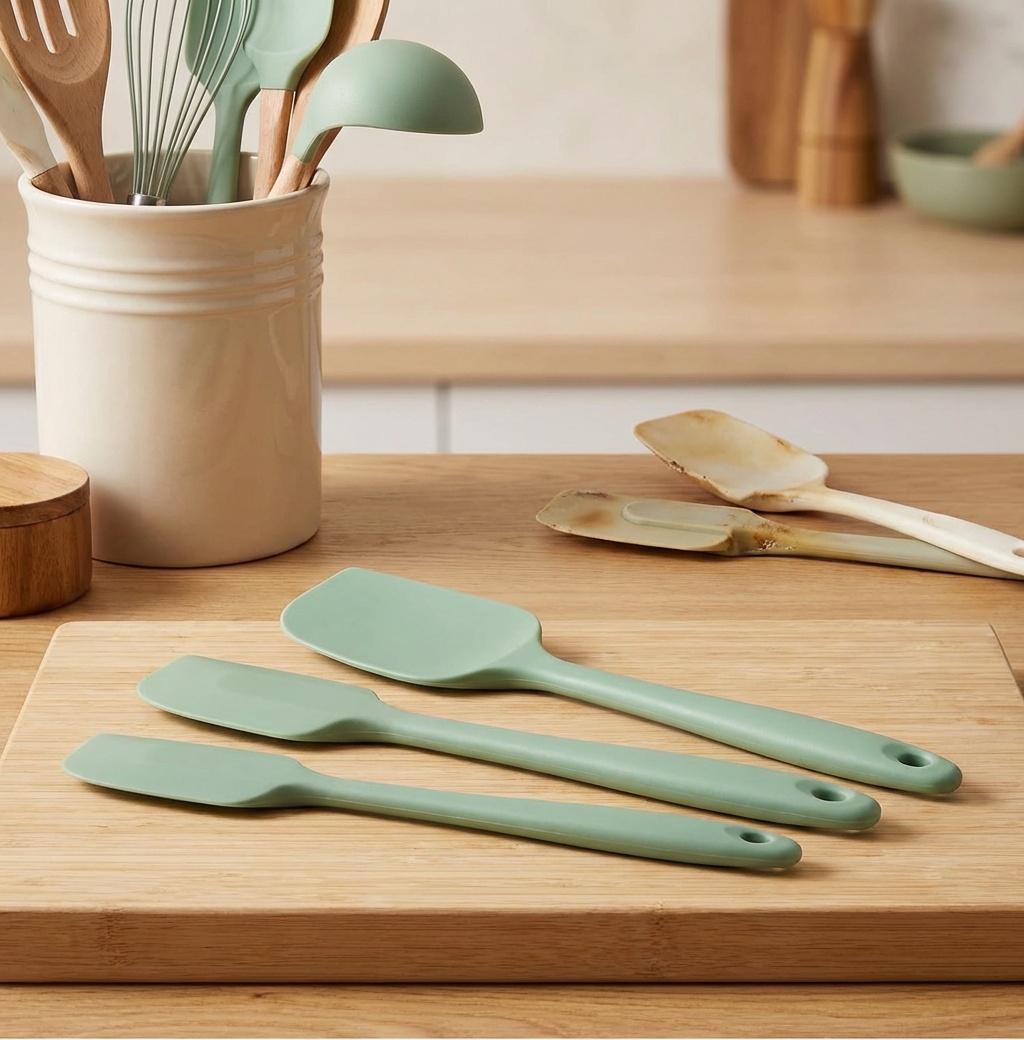
Protecting your family starts with recognizing inferior products. Warning signs include:
- Chemical smell that won't go away (especially when heated)
- Flimsy construction with visible seams or air bubbles
- Missing certification info or vague "food-safe" claims
- No manufacturer details or mysterious origin stories
Your Pre-Purchase Checklist
- Verify BPA-free and food-grade certifications
- Confirm platinum curing (ask if it's not clearly stated)
- Check heat resistance. 600°F is the sweet spot
- Research the brand's transparency about manufacturing
- Read verified reviews about long-term durability
Getting the Most from Your Silicone Tools
Heat resistance up to 600°F makes silicone incredibly versatile. Searing, stirring, baking, you name it. Just avoid direct flames and don't use metal utensils on nonstick cookware. Simple habits that keep your tools performing like champions.
Notice lingering smells? That's a quality red flag. Good silicone resists absorbing odors. If your tools start holding onto yesterday's garlic, they might be subpar. Try a baking soda paste refresh for certified products.
Dishwashers work fine, but hand washing helps preserve reinforced cores longer. Check regularly for hardening, cracks, or exposed cores. When integrity starts failing, it's replacement time.
The DI ORO Difference: Silicone You Can Actually Trust
Our Silicone Spoonula shows what premium construction looks like. BPA-free silicone that's both US FDA and German LFGB certified, paired with an 18/10 stainless steel reinforced core. Translation? Durability that matches your ambition.
This isn't just our opinion. America's Test Kitchen and Cook's Illustrated named it their top all-around silicone spatula. Heat resistant to 600°F, dishwasher safe, and backed by our Forever Warranty because we don't make tools that quit on you.
When Silicone Really Shines
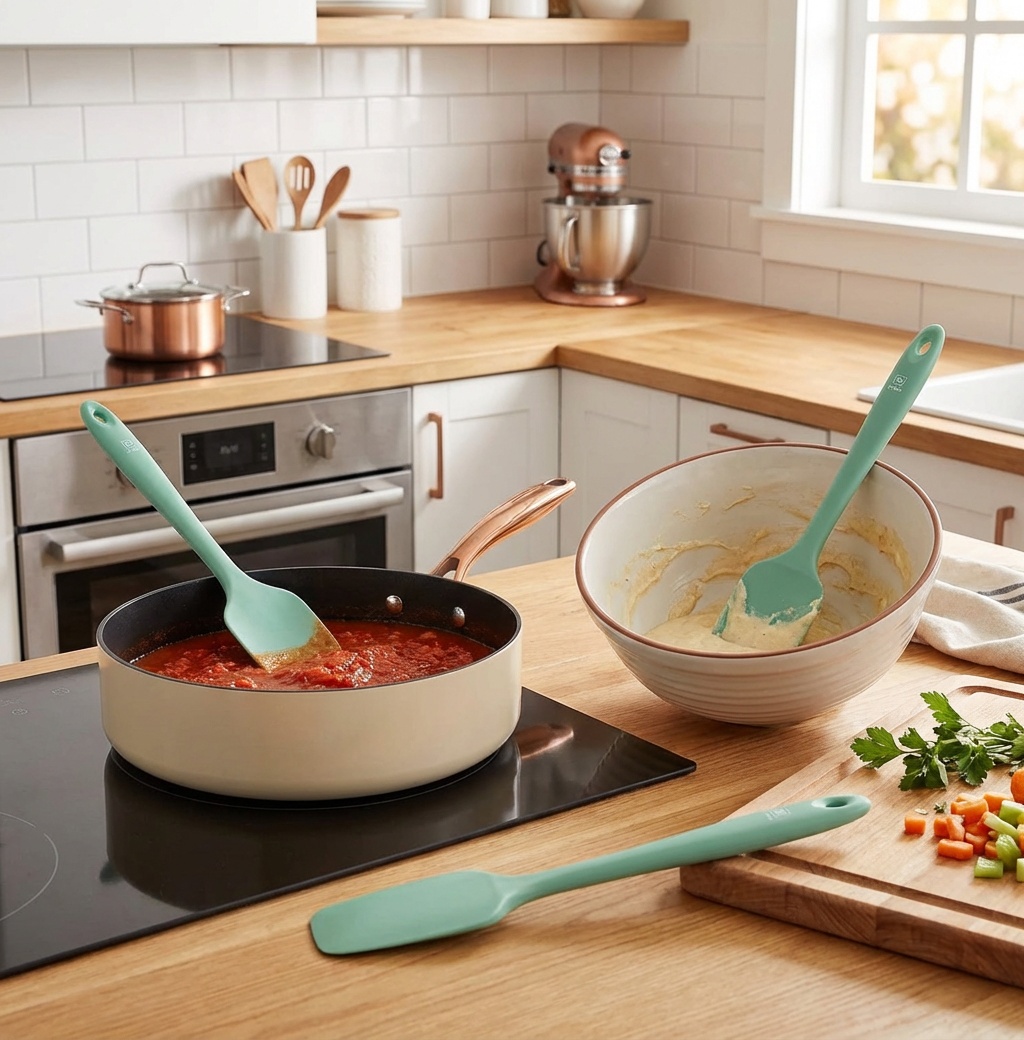
Quality silicone tools make daily cooking feel effortless. Stirring simmering sauces, folding delicate batters, scraping every last bit from the bowl. All without scratching your cookware.
Baking and silicone are a perfect match. Mixing doughs, handling hot ingredients, temperature swings that would make other materials nervous. Silicone takes it all in stride. Those flexible edges scrape thoroughly while the 600°F rating handles whatever heat you're working with.
Hot soups, stews, and risottos call for tools that stay stable and non-reactive. Unlike wood that can splinter or harbor bacteria in its pores, silicone stays smooth and easy to sanitize. A quality soup ladle makes serving a breeze.
Don't Make These Mistakes
- Using faded or hardened tools past their prime
- Exposing silicone to direct burner flames
- Buying tools without clear certifications
- Ignoring persistent odors (they're trying to tell you something)
Why Quality Pays Off
Good tools are an investment in cooking confidence. Those tempting budget options? They'll let you down when you need them most and cost more in the long run through constant replacements.
Do the math: One spatula that lasts five years beats three cheap ones that fail within two. Better performance, less waste, more money in your pocket.
Manufacturers who stand behind their products offer meaningful warranties. That kind of backing signals real confidence in build quality. And gives you peace of mind when you're investing in your kitchen.
Your Silicone Safety Checklist
- Demand food-grade certification (FDA or LFGB)
- Choose platinum-cured, BPA-free construction
- Expect 600°F heat resistance minimum
- Buy from brands that offer real warranties
- Replace tools when they show wear signs
Smart Shopping: Your Action Plan
Armed with this knowledge, you can shop with confidence. The secret? Understanding certifications, recognizing quality markers, and choosing manufacturers who prioritize transparency over marketing buzzwords.
The Truth About Silicone Safety
Properly certified silicone is an excellent choice for kitchen use. Concerns about "forever chemicals" often stem from confusion. Silicone isn't PFAS. It's made from siloxanes, a completely different compound. Stick with platinum-cured, food-grade products with clear FDA or German LFGB documentation.
Quick Decision Framework
- Verify food-grade and LFGB or FDA certification
- Confirm platinum curing and BPA-free composition
- Expect heat resistance up to 600°F
- Choose manufacturers with meaningful warranties
- Research brand reputation through verified reviews
Smart silicone shopping comes down to balancing material quality, manufacturing integrity, and long-term value. When you choose certified products and buy from brands that stand behind their tools, you're setting your kitchen up for better performance and fewer headaches.
Ready to upgrade? Use this checklist, verify those certifications, and choose tools built for the way you actually cook.
Frequently Asked Questions
Are silicone cooking utensils safe for everyday cooking?
Yes, absolutely! High-quality silicone cooking utensils are incredibly safe for your kitchen. When you choose certified food-grade, platinum-cured silicone, you're getting a tool that's built for confidence and culinary success. Look for BPA-free, FDA or LFGB compliance, and heat resistance up to 600°F for peace of mind.
Can silicone utensils leach chemicals into my food?
With premium, food-grade silicone, you don't have to worry about chemicals leaching into your delicious creations. Quality silicone is inert and non-porous, meaning it won't break down or release unwanted substances when used within its proper heat resistance range. This makes it a dependable choice for your cooking adventures.
Do silicone spatulas or utensils release microplastics?
No, you can cook with confidence knowing that high-quality silicone utensils do not release microplastics. Unlike some plastics, certified food-grade silicone is a stable, inert material. It's designed to remain intact and not break down into tiny particles, even when heated within its specified temperature range.
How can I tell if my silicone utensils are high quality?
It's all about looking for the right indicators! Always verify BPA-free and food-grade certifications, like FDA or German LFGB, and confirm platinum curing for the cleanest material. High-quality silicone should also be heat resistant up to 600°F, feel sturdy, and have no strong chemical odors or visible seams.
What's the best way to care for my silicone cooking tools?
Keeping your silicone tools in top shape is simple! Always avoid direct flame and using metal utensils on nonstick surfaces to extend their life. While dishwasher safe, hand washing can help preserve reinforced cores over time, and a baking soda paste can refresh them if they ever absorb odors.
When should I replace my silicone kitchen utensils?
As your culinary partner, we always recommend inspecting your silicone tools regularly. It's time to replace them if you notice any signs of hardening, cracking, or if the reinforced core becomes exposed. Replacing tools when their integrity diminishes ensures continued safety and top performance in your kitchen.
About the Author
Joe, Marketing Manager at DI ORO, is the chief word-whisk behind our culinary blog. When he’s not stress-testing spatulas at 600°F, he’s whipping up tips that turn “what if?” into “what’s next” in your kitchen.
From our Seamless Series. Named Best Silicone Spatula by America’s Test Kitchen. To our Food Network-loved spoonulas, DI ORO creates forever-chemical-free tools that help home chefs cook boldly and safely. Explore the collection and bring a little gold standard to every recipe.
- 1 cup plastic measuring cup
- 10 measuring tools in cooking
- 100 stainless steel cookware
- 1947 date nut bread
- 2 cup glass measuring cup with raised markings
- 2 cup measuring cup plastic
- 20 kitchen utensils name list with pictures
- 24 inch wooden spoon
- 3 inch mini tongs
- 3 ingredient easy onion dip recipe
- 3 ingredient homemade weed killer
- 3 lb top round roast cooking time
- 40 cookie scoop size
- 50 kitchen tools and equipment and their uses
- 50 kitchen utensils
- Alisa's Garden Blog
- all clad measuring spoons
- almond ice cream magnum
- almond ice cream recipe
- amazon kitchen gadgets 2024
- amazon kitchen gadgets under $10
- amazon kitchen items sale
- anthropologie measuring cups
- are non stick pans safe when scratched
- are silicone utensils safe
- award winning green chili stew
- baby food maker
- baby snacks
- baby yogurt
- baked rigatoni with ricotta
- baked rigatoni with sausage
- baked ziti
- baker of seville bread lame
- Baking Mat
- baking rack for sheet pan
- baking rack near me
- baking rack stand
- baking rack storage
- baking rack vs cooling rack
- baking racks for cooling
- banana brownies
- banana pudding brownies recipe
- banana walnut bread
- bar spoon for layering
- bar spoon measurement
- bar spoon name
- bar spoon nearby
- bar spoon set
- bar spoon size oz
- bar spoon walmart
- bar spoon with muddler
- basic kitchen utensils list
- beef braising recipes
- beet puree recipe
- beginner sourdough recipe
- benriner mandoline
- best affordable non toxic cookware
- best amazon kitchen gadgets
- best automatic coffee machine with grinder
- best baked rigatoni recipe
- best baking spatula
- best bread scoring knife
- best cheese grater
- best chocolate caramel fondue recipe
- best coffee pods on amazon
- best commercial meat slicer for home use
- best cooking utensil material
- best cooking utensils for health
- best cooking utensils for stainless steel
- best cooking utensils set
- best countertop cheese grater
- best electric cheese grater
- best fish spatula
- best fish spatula for nonstick pans
- best flavored k-cups
- best food slicer review
- best food storage containers
- best food storage containers for fridge
- best food storage containers pantry
- best freezer bags reusable
- best frozen drinks blender
- best gluten free waffle recipe
- best handheld rotary cheese grater
- best juice for immune system
- best k cups reddit
- best k-cups for coffee snobs
- best kentucky mule recipe
- best kitchen scissors
- best kitchen scissors uk
- best kitchen tongs
- best kitchen utensil material
- best kitchen utensil set
- best kitchen utensil set-silicone
- best kitchen utensils
- best liquid measuring cups
- best loco moco recipe
- best long slotted spatula for flipping
- best mandoline review
- best manual vegetable chopper
- best measuring cups
- best measuring spoons
- best mini food processor
- best mini whisk
- best mixing bowls with lids
- best non toxic cookware
- best non toxic cookware set
- best non toxic food storage containers
- best non toxic food storage containers with lids
- best non toxic glass food storage containers
- best oil for wooden spoons
- best pan for eggs
- best pecan tassies recipe
- best professional mandoline slicer
- best quality stainless steel cookware
- best reusable gallon bags
- best reusable snack bags
- best rotary cheese grater
- best rotary cheese grater america's test kitchen
- best rotary grater
- best silicone cooking utensils
- best silicone spatula
- best silicone utensil set
- best spatula for cast iron
- best spatula for cooking
- best spatula for eggs
- best spatula for flipping eggs
- best spatula for non stick pan
- best spatula for smash burgers
- best stainless steel egg pan
- best stainless steel kitchen utensils
- best stainless steel ladle
- best stainless steel measuring cups
- best stainless steel tongs
- best steak sandwich recipe
- best sugar wax recipe
- best turner spatula
- best vanilla bean ice cream recipe
- best zester tool
- beswood meat slicer
- beverages
- big wooden spoon decoration
- blondies recipe
- blue monster ice cream blue bell
- braided chicken recipe
- bread lame
- bread lame pronunciation
- bread pudding french toast recipe
- bread pudding french toast snooze
- bread scoring knife diy
- bread scoring knife near me
- bread scoring knife target
- broil burgers in oven on high or low
- broil hamburgers in oven
- bron coucke mandoline
- brown sugar coffee syrup recipe
- brown sugar simple syrup
- brown sugar syrup recipe
- bubble waffle cone
- bubble waffle ice cream
- bubble waffle maker
- bubble waffle near me
- bubble waffle recipe
- bunny butt cupcakes
- bunny butt wreath
- bunny cookies
- burrito bake recipes
- burrito bake with tortillas
- butter chicken wings
- buttery nipple drink
- buttery nipple recipe with vodka
- buttery nipple twisted shot
- buttery nipple vs slippery nipple
- cajun shrimp mac and cheese
- cambom rotary cheese grater
- can you pressure can instead of water bath
- caramelized onions
- cast iron dutch oven recipes
- ceramic cookware
- ceramic measuring cups
- ceramic mixing bowls with lids
- ceramic non toxic cookware
- chai tea
- cheap and easy stove top recipes
- cheap stovetop meals no oven
- cheese crisp arizona
- cheese crisp mexican
- cheese crisps recipe
- chicken broccoli braid recipe
- chicken burrito bake
- chicken thigh marinade
- chicken wings on pit boss
- chocolate fondue recipe
- christmas gifts for dad
- citrus peeler cocktail
- citrus peeler pampered chef
- citrus peeler tupperware
- clearance kitchen items
- cocktail blender with ice crusher
- cocktail spoon
- coconut oil for wooden spoons
- coconut sorbet costco
- coconut sorbet in shell
- coconut sorbet near me
- coconut sorbet recipe
- coffee loophole diet
- coffee loophole recipe free
- coffee loophole recipe reviews
- coffee loophole recipe without video
- coffee loophole reviews
- coffee maker with grinder and frother
- coffee maker with grinder and k-cup
- coffee pods
- collapsible 2 cup measuring cup
- collapsible liquid measuring cup
- collapsible measuring cups and spoons
- collapsible measuring spoons
- collapsible silicone measuring cups
- cookie scoop set
- cookie scoop size chart pdf
- cookie scoop sizes chart
- cookie scoop sizes tablespoon
- cookies and cream ice cream ingredients
- cookies and cream ice cream recipe with ice cream maker
- cooking gifts for men
- cooking on stove top recipes
- cooking pasta in sauce in oven
- cooking pasta in sauce not water
- cooking tongs
- cooking tongs silicone
- cooking tweezers
- cooking with stainless steel pan
- cooking with stainless steel vs nonstick
- cookware non stick vs stainless steel vs ceramic
- cool kitchen appliances
- cornmeal waffles recipe
- cowboy butter chicken
- crock-pot 4.5 quart
- crock-pot 7-quart programmable slow cooker
- crock-pot 8-quart
- crock-pot cook and carry
- crock-pot express pressure cooker
- crock-pot programmable
- crock-pot slow cooker
- crockpot sizes
- croque monsieur breakfast casserole recipe
- croque monsieur recipe
- cuisinart grind and brew
- cuisinart mini food processor 4-cup
- cuisinart stainless steel ladle
- cute measuring cups
- date bread in a can
- date bread recipe
- demeyere stainless steel cookware
- demitasse spoon
- dill seasoning packet
- dill seasoning substitute
- dill seasoning walmart
- do you add sauce to pasta or pasta to sauce
- does cooking in non stick pan cause cancer
- does the shiny side of aluminum foil reflect heat
- dragon fruit benefits
- drinks to make with a blender non alcoholic
- dry measuring cup
- dry measuring cups
- dutch oven cooking book
- dutch oven cooking chicken
- dutch oven cooking recipes
- easy blender alcoholic drinks
- easy chocolate caramel fondue recipe
- eggs sticking to pan even with oil
- electric cheese grater
- electric food slicer review
- electric mini food processor
- extra large silicone spatula
- extra large wooden spoon
- extra long slotted spatula for flipping
- fall-apart top round roast
- first apartment gifts for couples
- flank steak grilling time chart
- flat measuring cups
- flat whisk
- flower measuring spoons
- food measuring cups for weight loss
- food measuring scale grams
- food safe oil for wooden spoons
- food scale
- food scale near me
- food storage containers for pantry
- food storage containers set
- food storage containers with lids
- food storage containers with lids airtight
- food storage containers with lids disposable
- food tongs
- food weight
- food weight scale
- fork and spoon menu
- fork and spoon near me
- fork and spoon restaurant
- french toast bread pudding recipe
- french vanilla bean ice cream recipe
- frozen burrito bake
- frozen coffee chick-fil-a
- frozen coffee dunkin
- frozen coffee machine
- frozen coffee near me
- frozen coffee recipe
- frozen drinks blender recipes
- frozen drinks non alcoholic
- gifts for dad who wants nothing
- gifts for dads who have everything
- gifts for dads who like to grill
- gir spatula
- glass food storage containers
- glass measuring cup pyrex
- glass measuring cup set
- glass measuring cup walmart
- glass measuring cup with lid
- glass mixing bowls with lids
- gluten free belgian waffle recipe
- gluten free waffle mix
- gluten free waffle recipe bob's red mill
- grater
- green chili pork stew recipe
- green chili pork stew slow cooker
- green chili stew with ground beef
- green pepper coulis
- grilled chicken thighs
- grilled chicken thighs marinade
- grilling chicken thighs
- grilling chicken thighs bone in
- grilling chicken thighs boneless
- grilling chicken thighs temp
- hard plastic measuring cups
- heavy duty stainless steel measuring cups
- heavy duty stainless steel mixing bowls with lids
- heavy duty stainless steel spoon
- heavy duty stainless steel tongs
- heavy duty vegetable chopper
- hestan stainless steel cookware set
- high quality stainless steel cookware brands
- homemade drinks to boost immune system
- hot honey pepperoni pizza near me
- hot honey pepperoni pizza recipe
- how do you sterilise jars for pickling
- how long to bake lasagna at 180
- how long to bake lasagna at 350
- how long to bake lasagna at 400
- how long to broil burgers in oven
- how long to cook flank steak on grill
- how long to cook lamb chops in oven
- how long to cook lamb chops in oven at 180
- how long to cook lamb chops in oven at 200
- how long to cook lamb chops in oven at 350
- how long to cook lasagna in oven
- how long to cook pasta in sauce
- how long to cook steak in stainless steel pan
- how long to grill bone in chicken thighs at 400
- how long to grill bone-in chicken breast
- how long to grill chicken thighs
- how long to grill chicken thighs with bones
- how long to grill flank steak medium
- how long to steam asparagus in steamer
- how long to steam thin asparagus on stove
- how much water to add to cook pasta in sauce
- how to can without a canner or pressure cooker
- how to clean stainless steel pans
- how to clean wooden spoons with boiling water
- how to clean wooden spoons with vinegar
- how to condition wooden spoons
- how to cook eggs in stainless steel pan without sticking
- how to cook eggs on stainless steel pan
- how to cook eggs on stainless steel without sticking
- how to cook flank steak on grill
- how to cook pasta sauce from a jar
- how to cook steak in stainless steel pan
- how to cook with stainless steel pan
- how to cook with stainless steel without sticking
- how to cut a dragon fruit red
- how to cut a yellow dragon fruit
- how to deep clean wooden spoons
- how to eat dragon fruit
- how to grill chicken thighs
- how to grill chicken thighs on gas grill
- how to grill flank steak on gas grill
- how to make a cheese crisp in the oven
- how to make a pan non stick with oil
- how to make a pan non stick with salt
- how to make a pan non stick with water
- how to make frozen coffee in blender
- how to make frozen drinks in a blender
- how to make mashed potatoes
- how to make pan non stick again
- how to make pasta with sauce and meat
- how to make stainless steel non stick for eggs
- how to make stainless steel non stick without oil
- how to pat dry chicken without paper towels
- how to pat dry meat without paper towel
- how to sauté chicken
- how to saute garlic
- how to sauté onions
- how to saute onions and peppers
- how to sauté onions for burgers
- how to sauté onions for steak
- how to sauté shrimp
- how to saute vegetables
- how to steam asparagus on stove
- how to steam asparagus without a steamer
- how to sterilise glass jars for pickling
- how to store cut dragon fruit
- how to take care of wooden spatula
- how to thicken beef stew with cornstarch
- how to thicken beef stew with flour
- how to thicken stew with flour
- how to use non stick pan for the first time
- how to zest a lemon without a zester
- hwachae jelly
- hwachae recipe ingredients
- hwachae recipe strawberry milk
- ikea measuring cup plastic
- induction compatible symbol
- induction pan bottom
- induction symbol
- international cookware pyrex
- is dragon fruit good for you
- is non stick cookware harmful to health
- is non stick pan good for deep frying
- is non stick stainless steel safe
- jerk chicken salad near me
- jerk chicken salad recipe
- jersey mike sub in a tub recipe
- k-cup pods
- kentucky mule ingredients
- kentucky mule recipe easy
- king arthur sourdough starter
- kitchen clearance sale
- kitchen collection outlet website
- kitchen gadgets for dad
- kitchen items a to z
- kitchen measuring chart
- kitchen measuring tools with names
- kitchen measuring tools with names and pictures
- kitchen outlet store online
- kitchen scale
- kitchen scissors
- kitchen scissors amazon
- kitchen scissors for cutting meat
- kitchen shears
- kitchen tong drawing
- kitchen tongs
- kitchen tongs silicone
- kitchen tongs stainless steel
- kitchen tools list and their uses
- kitchen tools list and uses
- kitchen tools list with pictures
- kitchen utensil set stainless steel
- kitchen utensil set with holder
- kitchen utensil set wood
- kitchen utensils
- kitchenware outlet near me
- kitchenware outlet store
- knorr spinach dip recipe
- knorr vegetable dip ingredients
- knorr vegetable dip mix
- knorr vegetable dip packet
- knorr vegetable recipe mix
- kws meat slicer
- large commercial food storage containers
- large food storage containers
- large freezer bags reusable
- large mixing bowls with lids
- large wooden ladle
- large wooden paddle for cooking
- large wooden spatula
- large wooden spoon and fork wall decor
- large wooden spoon for cooking
- lasagna recipe
- leclerc celebration cookies
- lemon gelato near me
- lemon gelato ninja creami
- lemon gelato recipe
- lemon gelato strain
- lime sorbet near me
- lime sorbet recipe
- lime sorbet strain
- liquid measuring cup definition
- liquid measuring cup glass
- liquid measuring cup vs dry
- lobster bake maine
- lobster bake near me
- lobster bake recipes
- loco moco gravy
- loco moco main ingredients
- loco moco recipe authentic
- loco moco recipe easy
- logan cucumber recipe cream cheese
- logan cucumber recipe peanut butter
- long slotted spatula for flipping amazon
- long wooden spoon
- made in stainless steel cookware
- magnetic measuring spoons
- magnetic measuring spoons amazon
- mandoline pronunciation
- mango gelato recipe
- mango gelato strain
- measuring cup
- measuring cups
- measuring cups and spoons
- measuring cups and spoons stainless steel
- measuring spoon
- measuring spoons
- measuring tool digital
- metal measuring cups and spoons
- metal measuring spoons
- metal spatula
- metal tongs
- metal tongs for cooking
- metal tongs small
- microplane cheese grater
- microplane zester
- mincing and chopping
- mincing daintily meaning
- mincing meat
- mincing pronunciation
- mincing words meaning
- mineral oil for wooden spoons
- mini food processor amazon
- mini food processor cuisinart
- mini food processor kitchenaid
- mini food processor vs blender
- mini serving utensils
- mini spoons
- mini tongs for appetizers
- mini tongs for charcuterie board
- mini whisk amazon
- mini whisk electric
- mini whisk for drinks
- mini whisk near me
- mini whisk set
- mini whisk silicone
- mint chocolate chip cake
- mint chocolate chip ice cream cake baskin robbins
- mint chocolate chip ice cream cake near me
- mint chocolate chip ice cream cake recipe
- mixing bowls with lids microwave safe
- mixing bowls with lids plastic
- mixing spoon for baking
- moist date bread recipe
- moist vanilla bundt cake recipe
- morning drink to boost immune system
- mueller vegetable chopper manual
- natural weed killer recipe
- nespresso coffee pods
- nespresso pods
- nespresso vertuo
- new apartment gifts for guys
- new apartment gifts for her
- new mexico green chile pork stew
- ninja mini food processor
- non induction pan
- non stick vs stainless steel health
- non stick vs stainless steel vs cast iron
- non stick vs stainless steel vs ceramic
- non toxic food storage bags
- non toxic food storage containers with lids
- offset spatula
- old fashioned pecan tassie recipe
- onion boil recipe air fryer
- oven baked lamb chops without searing
- oxo fish spatula
- oxo silicone utensils
- oxo stainless steel ladle
- oxo utensil set
- pampered chef chicken & broccoli braid
- pasta to sauce ratio in grams
- pat dry hair
- pat dry meaning
- pat dry past tense
- pat dry skin
- pat dry towel
- pecan tassies recipe easy
- pecan tassies recipe southern living
- peony measuring cups
- philly steak sandwich recipe
- pink measuring cups
- pioneer woman date nut bread
- pit boss wings
- pizza hut
- pizza peel
- pizza wheel by west avenue grille menu
- pizza wheel cutter
- pizza wheel menu
- plastic food storage containers
- plastic measuring cup set
- plastic measuring cups set
- polygon measuring spoon amazon
- polygons flat 3-in-1 folding measuring spoons
- polygons flat measuring spoon
- polygons measuring spoon review
- portion control bowls
- portion control bowls and plates
- portion control cups instructions
- portion control cups with lids
- potato masher
- potato ricer
- practical gifts for first apartment
- praline cookies recipes
- pressure canner
- professional kitchen scissors
- professional kitchen tongs
- professional mandoline slicer
- progressive international kitchen
- pub-style steak sandwich recipe
- pureed
- pyrex 2 cup measuring cup
- pyrex glass measuring cup set
- quality stainless steel cookware sets
- quick sourdough bread recipe
- raspberry ice cream recipe
- raspberry sorbet
- raspberry sorbet recipe
- ravioli carbonara olive garden
- ravioli carbonara olive garden recipe
- ravioli carbonara olive garden review
- ravioli carbonara recipe
- recipe strawberry crunch cake
- red pepper coulis recipe
- reusable baby food pouches
- reusable freezer bags
- reusable freezer bags silicone
- reusable gallon freezer bags
- reusable sandwich bags
- reusable silicone snack bags
- reusable snack bags for school
- reusable snack bags with zipper
- reusable yoghurt pouches
- reusable ziplock bags silicone
- rice cereal for babies
- Roasted Salmon
- rotary cheese grater
- rotary cheese grater near me
- rotary grater
- rotary grater amazon
- rotary grater and slicer
- rubber scraper spatula
- rubber scraper vs spatula
- rubber spatula
- safest non stick cookware
- Salmon
- sandwich bag
- saratoga cooking classes
- saute meaning in cooking
- sauté vs fry
- sauteed onions vs caramelized onions
- sautéed potatoes
- sauteed pronunciation
- sautéed vegetables
- savory fig recipe
- scissors
- shrimp mac and cheese bubba gump
- shrimp mac and cheese near me
- shrimp mac and cheese recipes
- shrimp tacos recipe
- silicone baking spatula
- silicone cooking utensils
- silicone kitchen utensils
- silicone spatula
- silicone spatulas
- silicone spoon
- silicone tongs
- silicone utensils
- simple steak sandwich recipe
- simple stove top recipes
- single serve coffee maker with grinder built-in
- slotted spatula
- slotted turner spatula
- small serving spoons for dips
- small serving tongs
- smart kitchen gadgets
- snack bag
- soft serve ice cream mix
- sorbet recipe
- sour cream and onion dip lipton
- sour cream and onion dip packet
- sour dough starter
- sour dough starter recipe
- spatula
- spatula for stainless steel pan
- spatula hardware
- spatula set
- spatula uses in laboratory
- spatulas
- spatulas set
- stainless clad vs stainless steel
- stainless steel baking rack for oven
- stainless steel cooking utensils
- stainless steel cookware
- stainless steel cookware brands list
- stainless steel cookware set
- stainless steel kitchen appliances
- stainless steel kitchen cabinets
- stainless steel kitchen cabinets ikea
- stainless steel kitchen set
- stainless steel kitchen tools
- stainless steel ladle amazon
- stainless steel ladle made in usa
- stainless steel ladle set
- stainless steel measuring cups
- stainless steel measuring cups and spoons
- stainless steel measuring cups cuisinart
- stainless steel measuring cups made in usa
- stainless steel measuring spoons
- stainless steel pan
- stainless steel pans made in usa
- stainless steel scissor tongs
- stainless steel tongs
- stainless steel tongs for cooking
- stainless steel tongs with silicone tips
- stasher bags
- steak in stainless steel pan vs cast iron
- steak sandwich sauce
- steamed asparagus seasoning
- steel mixing bowls with lids
- stirring paddle cooking
- stovetop meals no oven
- stovetop meals no oven for family
- strawberry blondies recipe
- strawberry brownies
- strawberry cheesecake ice cream bar
- strawberry cheesecake ice cream ben and jerry's
- strawberry cheesecake ice cream haagen-dazs
- strawberry cheesecake ice cream near me
- strawberry cheesecake ice cream recipe
- strawberry crunch cake cheesecake
- strawberry crunch cake ice cream
- strawberry crunch cake near me
- strawberry crunch cake with golden oreos recipe
- strawberry white chocolate blondies
- strong homemade weed killer
- stuffed pepper skillet recipe
- sub in a tub salad
- super benriner mandoline
- sur la table
- susteas rotary cheese grater
- taste of home burrito bake
- tea
- toasted almond ice cream good humor
- toasted almond ice cream where to buy
- tongs
- top 10 stainless steel cookware brands
- top round roast cooking time
- top round roast recipe oven
- top round roast recipe slow cooker
- turner spatula
- tweezer tongs
- unique cooking gifts for dad
- unique gifts for dad
- unique kitchen gifts
- useful gifts for new homeowners
- useful kitchen gadgets
- vanilla bean ice cream recipe cuisinart
- vanilla bean ice cream recipe kitchenaid
- vanilla bundt cake recipe
- vanilla bundt cake with cake mix
- vegetable box chopper
- vertuo pods
- vevor meat slicer
- victorinox fish spatula
- vinegar weed killer recipe
- waffle stick maker
- waffle sticks eggo
- waffle sticks near me
- waffle sticks pillsbury
- waffle sticks recipe
- walnut bread recipe
- warm winter beverage
- water bath canning
- water bath vs pressure canning tomato sauce
- water bath vs steam canning
- what is a jar spatula
- what is spatula used for
- what kills weeds permanently naturally
- what temp to broil burgers in oven
- where to buy coconut sorbet
- which side of aluminum foil is for hot food
- which side of aluminum foil is toxic
- which side of foil to use in oven
- william sonoma near me
- winco fish spatula
- wings on pit boss
- wire baking rack for oven
- wooden cooking paddle
- wooden spatula
- wusthof fish spatula
- zester vs grater
- zyliss cheese grater
- zyliss rotary cheese grater


Please upload banner from store admin blog pages