Baking Spatulas & Tools: Forever-Chemical-Free Guide
Key Takeaways
- The right spatula technique can be the key difference between a collapsed soufflé and a perfect rise.
- Choosing the proper baking spatulas and tools is essential for consistent, professional baking results.
- Baking essentials are not just about convenience but also about improving the quality of your baked goods.
- Smart home bakers prioritize having the correct tools for mixing, folding, and frosting tasks.
Table of Contents
Baking Essentials for Baking Spatulas and Tools (The Confident Home Baker's Guide)
Start Here – The Essential Baking Spatulas & Tools Every Home Baker Actually Uses
The difference between a collapsed soufflé and a perfect rise often comes down to your spatula technique, and having the right tool for the job. Smart home bakers know that baking essentials for baking spatulas and tools aren't just about convenience; they're about achieving consistent, professional results every time you mix, fold, or frost.
If you bake 2-3 times a month, certain tools move from "nice to have" to absolutely essential. These are the spatulas and tools you'll reach for in 90% of your baking projects, from weekend cookie batches to holiday showstoppers.
The Non-Negotiable Core Kit (What You'll Reach for Every Week)
Your foundation should include these six workhorses:
- Silicone mixing spatula (11-13 inches, heat-resistant to 600°F) for folding batters and scraping bowls
- Spoonula for stirring thick cookie doughs and transferring batter without waste
- Offset spatula (4-6 inch blade) for frosting cupcakes and smoothing brownie tops
- Balloon whisk (10-12 inches) for aerating cake batters and whipping cream
- Pastry scraper/bench scraper for dividing doughs and cleanup
- Mini spatula set for scraping jars, small bowls, and those hard-to-reach spots under stand mixer paddles
Consider three common scenarios: chocolate chip cookies need your spoonula for thick dough and mini spatula for vanilla extract bottles. Brownies rely on your large spatula for gentle folding and offset spatula for that bakery-smooth top. A simple vanilla cake uses your whisk for batter, large spatula for bowl-scraping, and offset spatula for frosting, proving how these tools work together seamlessly.
Why Spatulas Are the Unsung Heroes of Better Bakes
Quality spatulas directly impact your results through three critical functions. Even mixing eliminates those frustrating dry flour pockets at the bottom of your bowl that create dense spots in finished cakes. Gentle folding preserves the air you've worked so hard to incorporate into meringues and whipped cream, the difference between a light angel food cake and a hockey puck. Clean transfer saves 1-2 tablespoons of batter per bowl, which translates to an extra muffin or two additional cookies per batch.
DI ORO's award-winning seamless spatulas earned recognition as Best Silicone Spatula by America's Test Kitchen and featured by Food Network for spoonulas, proving that professional-grade tools make measurable differences in home kitchens. When your spatula can handle 600°F without warping and contains zero forever chemicals, you're investing in both performance and health.
Meet Your Baking Spatulas – Types, Shapes, and When to Use Each

Understanding spatula anatomy eliminates the guesswork when you're standing in your kitchen wondering which tool will give you the cleanest fold or smoothest finish. Each design serves specific purposes that become obvious once you know what to look for.
The classic silicone spatula features a flat, flexible edge on an 11-13 inch handle, your go-to for folding delicate batters and scraping mixing bowls clean. Its wide, thin profile slides easily around curved bowl edges and provides the gentle touch needed for incorporating egg whites into cake batter without deflating.
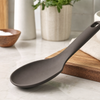
A spoonula combines a spoon's curved bowl with a spatula's scraping edge, making it ideal for stirring thick cookie doughs that would bend a regular spatula, and for portioning batter into muffin tins without drips. The hybrid design excels at stovetop tasks like stirring custards or caramel where you need both mixing and scraping action.
Mini spatulas at 7-9 inches with narrow heads become essential for small-batch baking, extracting every drop from vanilla bottles, and reaching into the tight spaces around stand mixer attachments where full-size tools can't reach.
Offset vs Straight Spatulas – Smoothing, Lifting, Finishing
Straight spatulas (icing spatulas) feature flat, unbent blades perfect for spreading fillings between cake layers and leveling batter in rectangular pans where you need even pressure across the surface.
Offset spatulas feature a blade with a "step" or bend that keeps your knuckles clear of frosting surfaces, making them indispensable for smoothing buttercream on cake tops, lifting delicate cookies from baking sheets without denting edges, and creating professional-looking swirls in brownie batter.
The offset design provides better leverage and control when working close to surfaces, try frosting a sheet cake with a straight spatula and you'll immediately understand why pastry chefs reach for offset tools.
Turner Spatulas vs Baking Spatulas (Don't Mix Them Up)
Turner spatulas are designed for flipping pancakes and lifting foods from hot pans, featuring firm, often beveled edges that can deflate delicate batters. Baking spatulas prioritize flexibility and gentle mixing action, with softer edges that conform to bowl curves without damaging incorporated air.
| Feature | Turner Spatula | Baking Spatula |
|---|---|---|
| Primary Use | Flipping, lifting from pans | Mixing, folding, scraping bowls |
| Typical Material | Firm silicone or metal | Flexible silicone |
| Flexibility | Rigid for support | Flexible for gentle folding |
| Best For | Stovetop cooking | Cakes, cookies, breads |
The Anatomy of a High-Quality Baking Spatula
The head should feature pro-grade silicone in seamless, one-piece construction with a flexible edge that maintains slight firmness through the core, this combination allows gentle folding while providing enough structure to move thick doughs.
A stainless steel core prevents bending under pressure when working with dense cookie doughs or bread batters, while the handle needs ergonomic grip and 10-13 inch total length to keep your hands comfortable and away from heat sources.
DI ORO's seamless construction eliminates bacteria-trapping seams, while LFGB-certified, forever-chemical-free silicone ensures what touches your food meets the highest safety standards.
For more tips on choosing the right spatula for your needs, check out our guide on top rated seamless spatulas for baking.
Baking Spatula Materials 101 – Silicone, Metal, Wood & More
Material choice determines whether your spatula will melt in caramel, scratch your favorite non-stick pan, or harbor bacteria in hidden crevices. Understanding these differences protects both your baking essentials for baking spatulas and tools investment and your family's health.
Why High-Quality Silicone Is the Baking MVP
Pro-grade silicone withstands temperatures up to 600°F without warping, making it safe for everything from melting chocolate to stirring hot sugar syrups. Unlike lower-grade plastics that soften around 350-400°F, quality silicone maintains its shape and flexibility even under extreme baking conditions.
The non-stick safe, flexible properties protect your expensive bakeware while providing the gentle touch needed for delicate batters. DI ORO's forever-chemical-free, BPA-free, LFGB-tested silicone ensures your tools support health-first cooking without compromising performance.
Silicone vs Rubber vs Plastic Spatulas
Traditional "rubber" spatulas were actually made from natural rubber that hardened and cracked over time, while early plastic versions warped or melted when exposed to temperatures above 350°F, common when making caramel or working with hot pans.
| Material | Max Safe Temperature | Flexibility | Non-stick Safety | 2-Year Durability | Dishwasher Safe |
|---|---|---|---|---|---|
| Pro-grade Silicone | 500-600°F | Excellent | Yes | Excellent | Yes |
| Standard Plastic | 300-400°F | Poor when warm | Usually | Poor | Usually |
| Natural Rubber | 250-350°F | Good initially | Yes | Poor (cracks) | No |
Metal & Wood – When They Shine, When to Skip
Metal spatulas excel at lifting cookies from steel baking sheets and provide the firm edge needed for precise cuts in brownies or bars. However, they scratch non-stick surfaces and lack the flexibility for gentle folding techniques. Skip metal when working with delicate batters, non-stick pans, or any mixing that requires finesse.
Wooden spatulas and spoons offer gentle pan contact and work beautifully for rustic bread doughs or stirring thick oatmeal cookies. The downside? Wood absorbs flavors, stains from chocolate or berries, and requires hand-washing with thorough drying to prevent bacterial growth. For health-conscious bakers prioritizing easy cleanup and cross-contamination prevention, silicone proves more practical.
Choose silicone over metal when folding egg whites, scraping non-stick surfaces, or mixing anything above 400°F. Choose silicone over wood when you want dishwasher convenience and odor-free tools that won't harbor bacteria in microscopic grain patterns.
How to Know if a Spatula Is Food-Safe & Truly Heat-Resistant
Look for clear temperature ratings on packaging, quality spatulas display their maximum safe temperature prominently, typically ranging from 400°F for basic tools up to 600°F for professional-grade options. Legitimate food-grade certifications include LFGB certification (stricter European standards) and FDA compliance for direct food contact.
Forever-chemical-free labeling matters more than many bakers realize. PFAS (per- and polyfluoroalkyl substances) can migrate from cookware into food, especially at higher temperatures. DI ORO™ spatulas eliminate this concern entirely with pro-grade silicone that's independently tested and certified free of these persistent chemicals. For more on the risks of certain plastics in food contact items, see this study on cancer-causing chemicals in black plastic food contact items.
Perform a simple quality check before first use: high-grade silicone feels smooth but not slippery, shows no chalky residue when rubbed, and has no chemical odor. If your new spatula smells plasticky or leaves residue on your fingers, return it, these signs indicate lower-grade materials that may not perform safely at stated temperatures.
Core Baking Techniques Where Spatulas Make or Break the Result
Folding Meringue and Whipped Cream Without Deflating
Proper folding preserves the air bubbles that create height in soufflés, angel food cakes, and mousses. The wrong spatula or technique can deflate hours of careful whipping in under a minute.
Use a large, flexible silicone spatula in a bowl at least 3 inches wider than your whisk diameter. Add one-third of the meringue to your base mixture first, this "sacrificial" portion lightens the heavier mixture and makes subsequent folding gentler. Cut straight down through the center, sweep along the bottom, and lift up the sides while rotating the bowl a quarter-turn with each stroke.
Complete each addition within 30-45 seconds. The mixture should show slight streaks when properly folded, over-mixing creates a uniform color but loses volume. DI ORO's award-winning seamless spatulas, recognized by America's Test Kitchen as the Best Silicone Spatula, provide the ideal balance of flexibility and control for these delicate techniques.
For more on the benefits of seamless spatulas in baking, read our article on seamless spatulas for smooth food handling.
Scraping Every Last Drop – Maximizing Batters and Mixes
Thorough bowl scraping recovers enough batter for an extra muffin or cookie per batch, typically 2-3 tablespoons of mixture that otherwise gets wasted. This matters most with expensive ingredients like vanilla, chocolate, or nuts.
Hold your spoonula at a 45-degree angle to the bowl and scrape from bottom to top in a continuous spiral motion for 15-20 seconds. The curved edge captures more mixture than flat spatulas. Follow with a mini spatula around the bowl's rim and underneath stand mixer paddles where batter hides.
For sticky batters containing honey, molasses, or nut butters, lightly oil your spatula before scraping. This prevents the mixture from clinging to the tool and ensures clean transfer to your pan.
Leveling, Swirling, and Smoothing for Even Bakes
An offset spatula transforms amateur-looking bakes into bakery-quality results. Use it to level brownie batter to consistent depth, edges should sit within 1/8 inch of the center thickness for even cooking.
Create professional swirl patterns in cheesecake or marble cake with 2-3 deliberate passes. Draw the spatula tip through contrasting batters in an "S" pattern, then rotate the pan 90 degrees and repeat once more.
For ultra-smooth frosting finishes, warm your offset spatula under hot water for 10 seconds, dry completely, then smooth in long, confident strokes. The slight warmth helps the frosting flow into an even layer without dragging or tearing.
Dough Handling with Scrapers and Spatulas
A bench scraper divides bread dough into perfectly equal portions when you weigh each piece to the nearest 5-10 grams. This ensures even rising and uniform final size across all rolls or loaves.
For sticky dough, dust the scraper, not the dough surface, with minimal flour, using just 1/2 teaspoon at a time. This prevents over-flouring that can toughen the final texture. Use swift, confident movements rather than sawing motions that can tear developing gluten strands.
For those looking to upgrade their baking toolkit, the 5-piece seamless jar spatula set is perfect for handling a variety of doughs and batters with ease.
For additional information on the health and safety of kitchen tools, you may also want to review this scientific article on food contact materials.
Frequently Asked Questions
What are the essential baking spatulas and tools every home baker should have?
Every home baker should have a core set of six essentials: a heat-resistant silicone mixing spatula for folding and scraping, a spoonula for stirring thick doughs, an offset spatula for frosting and smoothing, a balloon whisk for aerating batters, a pastry scraper for dividing dough and cleanup, and a mini spatula set for small jars and tight spots. These tools cover 90% of baking tasks, from cookies to cakes.
How does using the right spatula technique affect the outcome of delicate baked goods like soufflés?
The right spatula technique ensures gentle folding that preserves the air incorporated into delicate batters, which is crucial for a soufflé’s rise and texture. Using improper technique or the wrong tool can deflate the batter, leading to a collapsed or dense result instead of a light, airy masterpiece.
What are the differences between silicone, metal, and wooden spatulas, and when should each be used?
Silicone spatulas are heat-resistant, flexible, and perfect for mixing, folding, and scraping without scratching cookware. Metal spatulas offer rigidity and are ideal for tasks like flipping or smoothing frosting but can damage non-stick surfaces. Wooden spatulas are sturdy and great for stirring thick mixtures but less versatile for delicate folding or scraping.
Why is investing in high-quality baking spatulas important for both baking results and health?
High-quality spatulas made from pro-grade, forever-chemical-free silicone ensure durability, precise performance, and safety by avoiding harmful substances that can leach into food. They help achieve consistent, professional baking results while protecting your health and your cookware.

Please upload banner from store admin blog pages